
skyrunnerstilts
ผู้เยี่ยมชม
hello@skyrunnerstilts.nl
Jumping Stilts: The Complete Guide to Powerbocking, Safety, and Buying Tips (96 อ่าน)
20 พ.ย. 2569 07:19
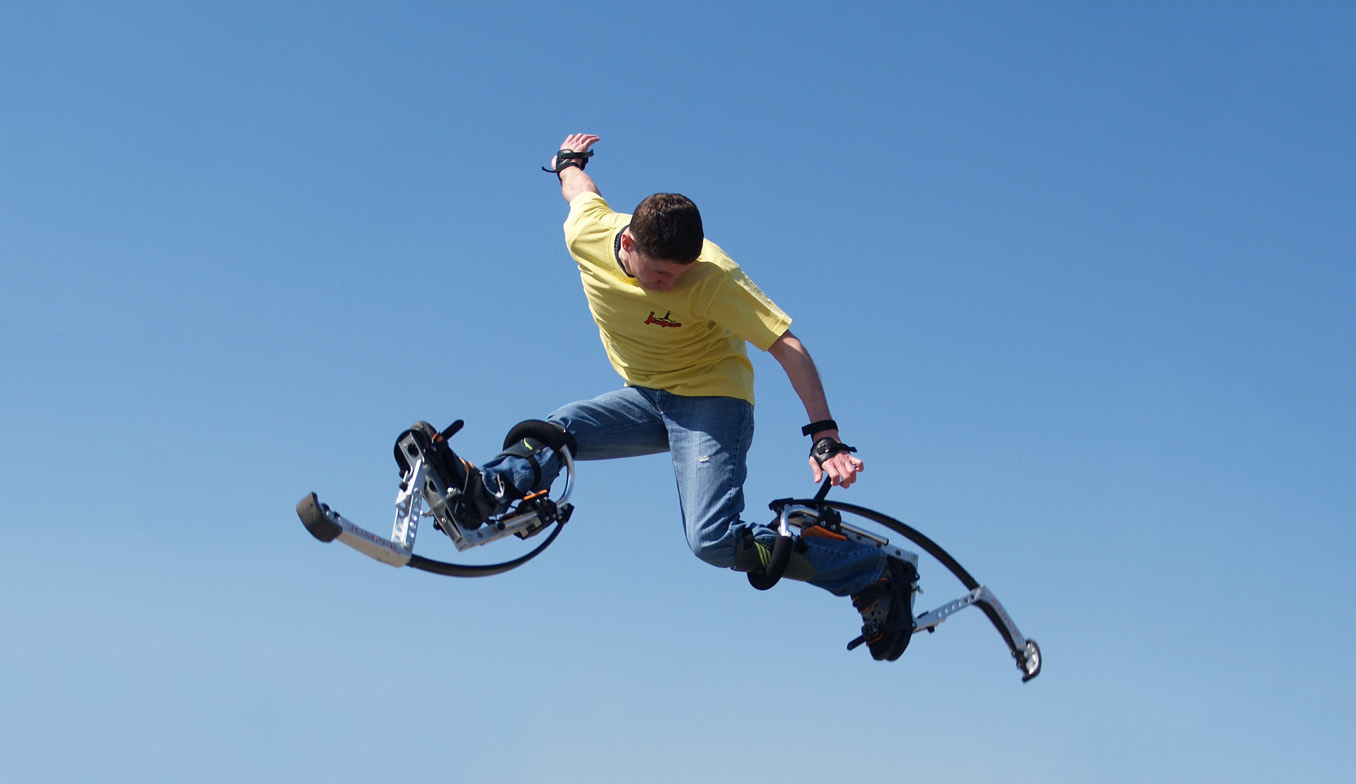
Skyrunnerstilts.NL—also known as power stilts, powerbocks, spring stilts, or by the sport name “powerbocking”—are a unique type of spring-powered footwear that let you run faster, jump higher, and perform acrobatic tricks using only your bodyweight and leg power. Whether you’re curious about the sport, looking for a new fitness hobby, or considering your first purchase, this guide will walk you through everything you need to know.
---
## What Are Jumping Stilts?
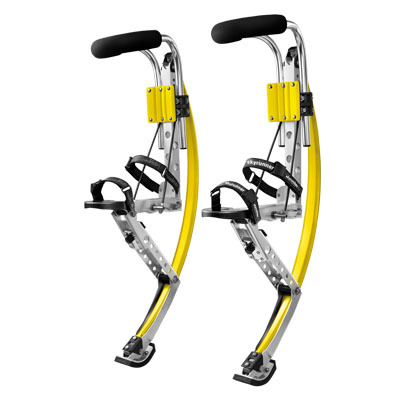
Jumping stilts are specially designed stilts with curved fiberglass or carbon-fiber springs attached to the back. They strap onto your lower legs and feet, allowing you to:
- Run at speeds up to around 20–25 mph (32–40 km/h) in some cases
- Jump up to 5–7 feet (1.5–2 m) vertically with advanced technique
- Perform flips, spins, and parkour-style moves
They work by storing the energy you put in when you land and releasing it when you push off. This “spring effect” makes your strides longer and your jumps much higher compared to normal running and jumping.
---
## A Brief History of Jumping Stilts and Powerbocking
- **Early 2000s** – German inventor Alexander Böck developed the first modern jumping stilts, marketed under names like PowerSkip and Powerbock.
- **Mid-2000s** – The activity spread to the UK, US, and across Europe, where it became known as “powerbocking” (from Böck’s name).
- **Late 2000s to 2010s** – Viral videos and live performances in shows, music videos, and events introduced jumping stilts to a wider audience.
- **Today** – Jumping stilts are used for fitness, freestyle tricks, street performances, cosplay, and even some stunt work.
---
## How Do Jumping Stilts Work?
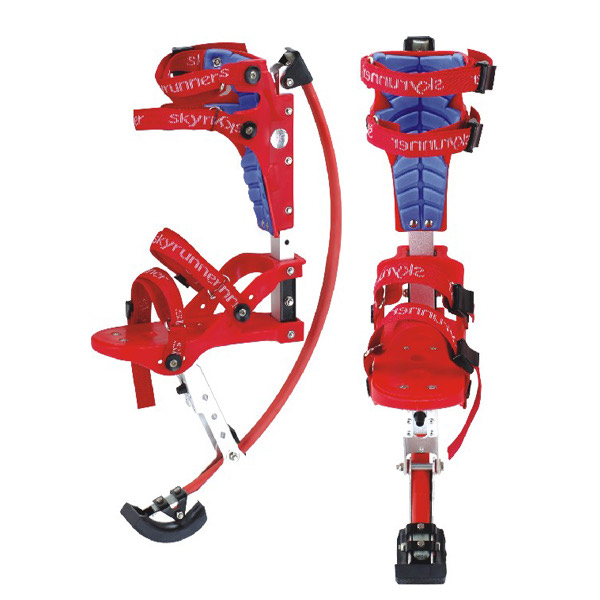
The basic components of jumping stilts include:
- **Foot plates and bindings** – Where your shoes are strapped in
- **Calf cuffs** – Secure your lower legs to the stilts
- **Leaf springs** – Curved fiberglass or carbon-fiber blades that flex and store energy
- **Frame and hinges** – Connect the springs to the binding and allow controlled movement
- **Rubber foot pads (“hooves”)** – Provide traction and absorb impact
### The Science Behind the Jump
When you land, your weight flexes the spring. As you transition into a push-off, the spring rebounds, giving you a powerful boost. The harder you load the springs—with proper form and strength—the more energy you get back, enabling higher jumps and longer strides.
---
## Types of Jumping Stilts
There are several categories of jumping stilts, differentiated by purpose and build quality:
### 1. Recreational Jumping Stilts
- Designed for beginners and casual use
- Focus on comfort and stability
- Usually have more forgiving springs for easier learning
- Ideal for fitness, fun, and low- to mid-level jumps
### 2. Performance and Freestyle Stilts
- Built for tricks, parkour, and show performances
- Often lighter and more responsive
- Springs tuned for higher jumps and faster running
- Require better balance, strength, and technique
### 3. Children’s and Youth Models
- Scaled-down frames and lighter springs
- Lower weight ranges for safety
- Introduce kids and teens to basic bouncing and balance
---
## Benefits of Jumping Stilts
Jumping stilts are not just a novelty; they offer genuine physical and mental benefits.
### Full-Body Workout
Using jumping stilts works several muscle groups at once:
- Quadriceps, hamstrings, and glutes
- Core muscles for balance and stabilization
- Calves and ankles
- Hip and lower-back muscles
Because you’re constantly balancing and absorbing impact, the workout is dynamic and functional.
### Cardio and Endurance
Running and jumping on stilts is intense cardiovascular exercise. Short sessions can:
- Boost heart rate
- Improve stamina and lung capacity
- Burn a significant number of calories in a relatively short time
### Coordination, Balance, and Agility
You develop:
- Better body awareness
- Faster reflexes
- Improved coordination and reaction time
- Stronger stabilizing muscles in ankles, knees, and hips
### Fun and Motivation
Many people find jumping stilts:
- Highly engaging and addictive in a positive way
- More exciting than traditional jogging or gym workouts
- Social—often practiced in groups or clubs
This fun factor can make it easier to stick to regular exercise.
---
## Are Springstelten voor volwassenen Safe?
With proper gear, training, and caution, jumping stilts can be used relatively safely. However, they are still an extreme sport tool, and injuries can happen if you skip safety basics.
### Essential Safety Gear
Never use jumping stilts without at least:
- **Helmet** – A well-fitting skate or bike helmet
- **Wrist guards** – Protect wrists from falls
- **Knee pads** – Essential as beginners often fall forward
- **Elbow pads** – Additional protection for common impact zones
- **Gloves (optional)** – Help prevent scrapes and improve grip
### Beginner Safety Tips
1. **Start on soft surfaces** – Grass, artificial turf, or gym mats are ideal at first.
2. **Use a spotter or support** – A railing, wall, or experienced friend helps with early practice.
3. **Learn to fall safely** – Tuck your head, avoid straight arms, and try to roll rather than catch yourself rigidly.
4. **Check equipment before every session** – Tighten bolts, check straps, examine springs and foot pads.
5. **Avoid traffic and obstacles** – Wide, open, obstacle-free areas are best for both beginners and advanced users.
---
## How to Get Started with Jumping Stilts
### 1. Choose the Right Size and Weight Range
Jumping stilts are rated for specific weight ranges. Selecting the correct rating is crucial:
- **Too light a rating** – Springs will bottom out, feel unstable, and wear quickly.
- **Too heavy a rating** – Very hard to compress; you’ll struggle to jump or run.
Weigh yourself with your normal clothing and shoes on, and pick a model rated for your full bodyweight. If you’re near the top or bottom of a range, lean toward the heavier option for durability and future progress.
### 2. Learn the Basic Skills
Progress step by step:
1. **Standing and balancing** – Practice holding onto something stable. Get used to the height.
2. **Small marching steps** – Lift one foot at a time, keeping your body upright.
3. **Short walks** – Start with very small steps and focus on balance.
4. **Controlled bouncing** – Gentle, low bounces to feel the spring response.
5. **Basic running motion** – Keep strides short at first; avoid sprinting until you’re comfortable.
6. **Low jumps** – Bend slightly, load the springs, and push off softly. Increase height slowly.
Take multiple short sessions rather than long, exhausting ones. Your leg muscles and balance systems need time to adapt.
---
## Training Ideas and Exercises
To progress safely and effectively:
- **Warm-up**: 5–10 minutes of light jogging, dynamic stretches, and joint mobilization.
- **Balance drills**: Standing on one leg (on or off stilts), side steps, and small hops.
- **Plyometrics**: Box jumps (off stilts), jump squats, and burpees to build explosive power.
- **Core training**: Planks, side planks, and rotational exercises for better stability.
- **Cooldown and stretching**: Focus on calves, hamstrings, quads, and hips to reduce stiffness.
---
## Tricks and Advanced Moves
Once you have strong fundamentals, you can explore:
- **High jumps and drops**
- **180° and 360° spins**
- **Knee tucks and star jumps**
- **Parkour-style vaults and wall runs**
- **Flips and aerial tricks** (for experts only, ideally with mats and coaching)
Always build up gradually. Advanced tricks should be learned under supervision or with spotters and proper safety mats.
---
## How to Choose the Best Jumping Stilts
When buying jumping stilts, consider the following factors:
### 1. Build Quality and Materials
- **Springs**: High-quality fiberglass or carbon fiber is preferred for performance and durability.
- **Frame**: Strong yet lightweight metal or composite materials are ideal.
- **Cushioning and straps**: Look for comfortable calf cuffs, secure foot straps, and padded contact points.
### 2. Weight Range and Intended Use
Match stilts to:
- Your bodyweight
- Your skill level (beginner vs advanced)
- Your primary use (fitness, casual fun, tricks, performance)
### 3. Brand Reputation and Support
Established brands and reputable sellers often provide:
- Better quality control
- Clear sizing guides
- Replacement parts (hooves, springs, straps)
- Customer support and tutorials
### 4. Spare Parts and Maintenance
Jumping stilts experience stress and wear. Check that:
- Replacement springs, foot pads, and straps are available
- Hardware (bolts, nuts, washers) can be easily sourced
- The design allows for straightforward inspection and maintenance
### 5. Price vs. Value
Cheapest is rarely best for a device that supports your full bodyweight. Balance:
- **Safety**
- **Durability**
- **Performance**
Spending a bit more upfront often saves money and frustration in the long run.
---
## Maintenance and Care
Regular maintenance extends the life of your jumping stilts and keeps them safe:https://skyrunnerstilts.nl/shop/
- **Inspect before each use** – Look for cracks in springs, loose hardware, and worn rubber feet.
- **Tighten bolts and screws** – Vibrations can loosen fasteners over time.
- **Clean after outdoor use** – Wipe down dirt, mud, and moisture to prevent corrosion.
- **Store properly** – Keep in a dry place, away from direct sunlight or extreme heat.
- **Replace worn parts promptly** – Don’t ignore cracks or heavily worn hooves.
---
## Who Should (and Shouldn’t) Use Jumping Stilts?
### Good Candidates
- Healthy adults and teens with decent basic fitness
- Athletes and parkour enthusiasts looking for a new challenge
- Performers, cosplayers, and entertainers wanting visual impact
- Fitness-focused individuals bored with traditional workouts
### Use Caution or Consult a Professional If You Have:
- Knee, ankle, or hip joint issues
- Back problems
- Balance or coordination difficulties
- Heart or circulatory conditions
When in doubt, talk to a doctor or physiotherapist before starting.
---
## Frequently Asked Questions About Jumping Stilts
**Are jumping stilts hard to learn?**
They take practice, but most people can stand and walk within the first session or two. Confident running and jumping usually come after several practice sessions.
**How high can you really jump?**
Beginners start with small hops under a foot. Skilled users can reach several feet of vertical height, often enough to jump onto benches, small walls, or platforms.
**Can kids use jumping stilts?**
Yes, with youth-sized models, strict supervision, and proper safety gear. Always follow manufacturer age and weight recommendations.
**Do I need special shoes?**
Secure, closed athletic shoes with good support are ideal. Avoid sandals, loose shoes, or anything that doesn’t strap tightly.
**Can I use jumping stilts indoors?**
Generally not recommended unless in a gym or large hall with adequate ceiling height and protected flooring. Most people train outdoors on flat, open surfaces.
---
## Conclusion: Are Jumping Stilts Worth Trying?
Jumping stilts offer a unique combination of:
- High-intensity cardio
- Strength and balance training
- Adrenaline and fun
- Visual impact for performances and videos
If you’re looking for a new way to stay fit, challenge yourself, or just experience what it feels like to run and jump with superhuman height and speed, Springstelten are worth serious consideration. Start with the right equipment, prioritize safety, and progress step by step—you may find powerbocking becomes your favorite new sport.
209.135.19.228
skyrunnerstilts
ผู้เยี่ยมชม
hello@skyrunnerstilts.nl